

A Spirituality of Forgiveness
Embracing Forgiveness - Part 1


I am writing to you, little children,
because your sins are forgiven
for his name’s sake.
1 John 2:12
A few years ago, I pulled into a Verizon Wireless parking lot, right off one of the busiest, red-light-riddled streets in Houston. There was only one spot left. If I didn’t take this spot, I would be forced back onto the busy street. Fat chance.
I swung my truck around, went wide, trying to squeeze into this tight spot—and I heard the noise. My side mirror clipped the Nissan’s. “Whew. That’s not too bad.”
But in my rearview mirror, there she was—pregnant, mouthing, “Are you serious?” over and over. I huffed, “I guess I didn’t just hit the mirror.”
After examining the damage, you would have thought the Nissan was t-boned. I left a long, crunching and crumpled dent. I apologized, trying to explain the precarious parking angle; she didn’t want to hear it. She fumed, “I just had this painted. You are going to pay for this.” No doubt, ma’am. She already had my plates and was on the phone with her insurance.
I called my insurance company and reported what happened. Before I could get too far into my rant on the dynamics of this poorly designed parking lot, the agent cuts me off. “Mr. Medders, good news. I’m looking at your account, and I see that you don’t have accident forgiveness. Would you like it?”
What now?
I replied, “Accident forgiveness? What is that? How much does it cost?”
The rep says, “Well, it’s as simple as it sounds. We forgive your first accident, this accident. We will handle it. And it only costs about a dollar a month. Would you like me to add it to your plan?”
My head whipped back like I had just been in an accident. “How will it cover this accident I just got in, one that’s now in the past?”
“Easy,” the rep said, “we will retroactively apply it. So, do you want it?”
Yes. And amen.
Truly Forgiven
It’s not uncommon for Christians to doubt that God has fully, truly, and long-lastingly forgiven us. The word “forgive” means to pardon, release, or cancel.1 God is one who is “ready to forgive” (Nehemiah 9:17). He does not hold our sins against us, relate to us in light of our sins, or decide to treat us as deserving Hell. The verdict is settled—God has forgiven us in Christ. Our sins aren’t even in the “back of his mind” when we pray, serve, sing, and live the Christian life. He declares that he will no longer remember our sins (Isaiah 43:25).2

In 1 John, the apostle John leans in and assures us, “Your sins are forgiven.” He writes it as a statement of fact. A Christian = A Forgiven Sinner. There is no other kind of Christian. The world, the flesh, and the devil don’t want us to find comfort and joy in the absolute forgiveness of God. It is a foreign function in this fallen world. It is supernatural. It is from above. It’s from God. It is truly divine.
Like retroactively applied accident forgiveness, the forgiveness of your sins has been post-dated to 33 AD. All of your sins, even your future sins, ones you haven’t even thought about committing yet, are all forgiven, and the adjustments are in your account. Your forgiveness has been geotagged to that hill outside of Jerusalem. At that empty garden tomb where Jesus won your victory, your pardon, your life, it is done. Fact: You are forgiven.
Our status as Christians has more to do with Jesus than it does with us. John wants every Christian to learn that the solidity of our salvation, of forgiveness of sins, depends on Jesus. It is about what he accomplished at the cross and the empty tomb.
Assurance of forgivness, of salvation, is found in Christ.
Ephesians 1:7 In him we have redemption through his blood,
the forgiveness of our trespasses, according to the riches of his grace.
The ultimate confidence of a Christian’s forgiveness from God isn’t found in a prayer. It isn’t realized in a genuine emotional experience, or the date of our conversion scribbled in the front of a Bible. The Holy Spirit wants us to remember Jesus, his name, who he is, and what he did for us as our assurance.
Totally Forgiven
Every person who believes in Jesus—the eternal Son of God dying and rising again for their sins—is forgiven in full. Christ is stronger than our sin. As the old hymn says:
My sin, not in part but the whole,
Is nailed to the cross, and I bear it no more,
Praise the Lord, praise the Lord, O my soul!
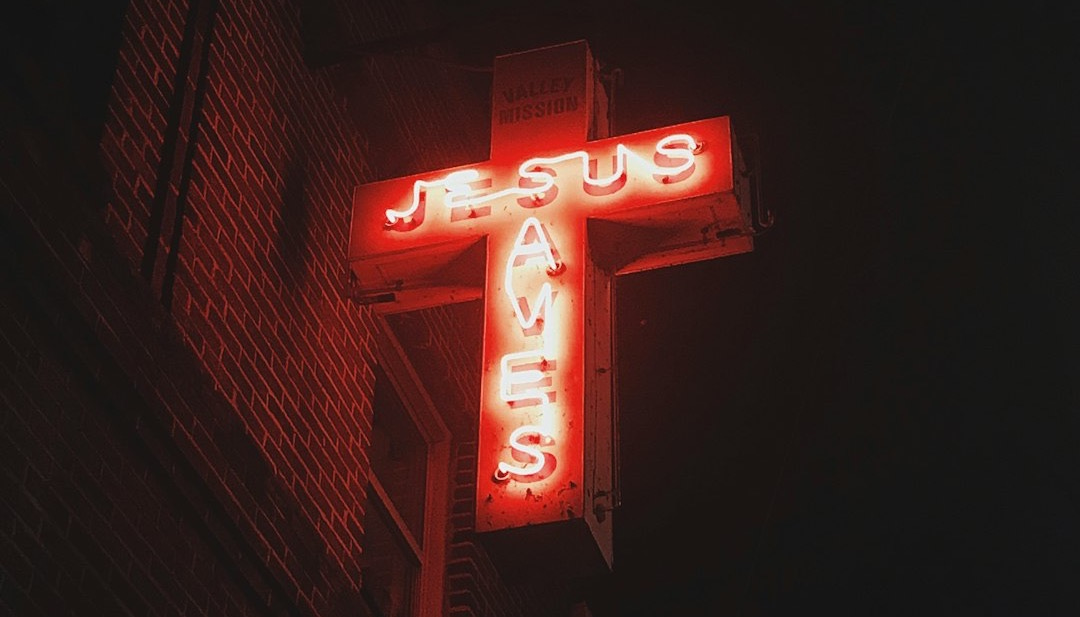
All our sins have been taken care of by Christ the Lord. If your trust is in the Son of God, that his dying and rising happened for you, then you are forgiven. But you must see him and his work as for you.
Many people are comfortable saying Jesus died on the cross, but that’s not the whole, authentic testimony of a Christian. Every year, the History Channel runs specials on the birth of Jesus, his crucifixion and resurrection. The History Channel hasn’t received Jesus as Lord. Forgiveness has a personal flavor because it involves persons—God to us.
Someone who has been born again by the power of the Spirit says, “The Son of God came to earth to save sinners like me. Christ died for me. Jesus died on that cross for my sins. Jesus rose from the dead for my salvation. Jesus is my Lord, my Savior, my Redeemer.” That’s saving faith, genuine faith.
Is that what you believe? If so, then your sins are forgiven.
If we are to have a spirituality of forgiveness, we must embrace the truth. Believe it. Live it. We must feel it. I want us to grow in our sense of being forgiven by God. That’s what part two will cover next time.
Psalm 86:5 For you, O Lord, are good and forgiving,
abounding in steadfast love to all who call upon you.
“In the NT there are two main verbs to consider, charizomai (which means ‘to deal graciously with’) and aphiēmi (‘to send away’, ‘to loose’). The noun aphesis, ‘remission’, is also found with some frequency.” See, L. L. Morris, “Forgiveness,” in New Bible Dictionary, ed. D. R. W. Wood et al. (Leicester, England; Downers Grove, IL: InterVarsity Press, 1996), 382.
“In the OT, the most direct words for forgiveness are סָלַח (sālaḥ, “forgive”) and סְלִיחָה (sĕlîḥâ, “forgiveness”). Forgiveness can also be expressed by stating that one will not “remember” (זָכַר, zākar) the offense or “count” (חָשַׁב, ḥāšab) the offense against someone. Where such mental acts are negated for a debt or offense, the result is a kind of forgetfulness concerning the debt or offense. Forgiveness may be motivated by or result in the demonstration of compassion (רַחֲמִים, raḥămîm). More metaphorically, forgiveness may be compared with physical removal (נָשָׂא, nāśāʾ, “lift up”; עָבַר, ʿābar, “pass over”), covering (כָּסָה, kāsâ, “cover”; כָּפַר, kāpar, “atone”), and cleaning or repairing (רָפָא, rāpāʾ, “cure”; מָחָה, māḥâ, “wipe”;טָהֵר, ṭāhēr, “be clean”).” See, J. David Stark, “Forgiveness,” in Lexham Theological Wordbook, ed. Douglas Mangum et al., Lexham Bible Reference Series (Bellingham, WA: Lexham Press, 2014).
I want to believe this but what then does it mean that ‘You will be judged by every careless word" (Matthew 12:36-37. )
Is this not for Christian’s too?