



Our Lord told us, “If you ask me anything in my name, I will do it” (John 14:14). This deserves some parsing:
The condition: If
The personal: you
The action: ask
The authority: me
The scope: anything
The standard: in my name
The promise: I will do it
Jesus is making quite the promise and invitation. This is why the apostle John told us to have confidence when we pray this way.
“And this is the confidence that we have toward him, that if we ask anything according to his will he hears us. And if we know that he hears us in whatever we ask, we know that we have the requests that we have asked of him” (1 John 5:14–15).
These two verses teach us to confidently pray according to the will of God—what is revealed to us in Scripture—and to ask in the name of Jesus—not just saying his name at the end, but submitting our requests to his authority, his will, his ways, and his means.
I believe the prayer I’m putting forward meets both categories. It is biblical—it is direct words from Scripture—and it’s to worship, enjoy, and glorify God.
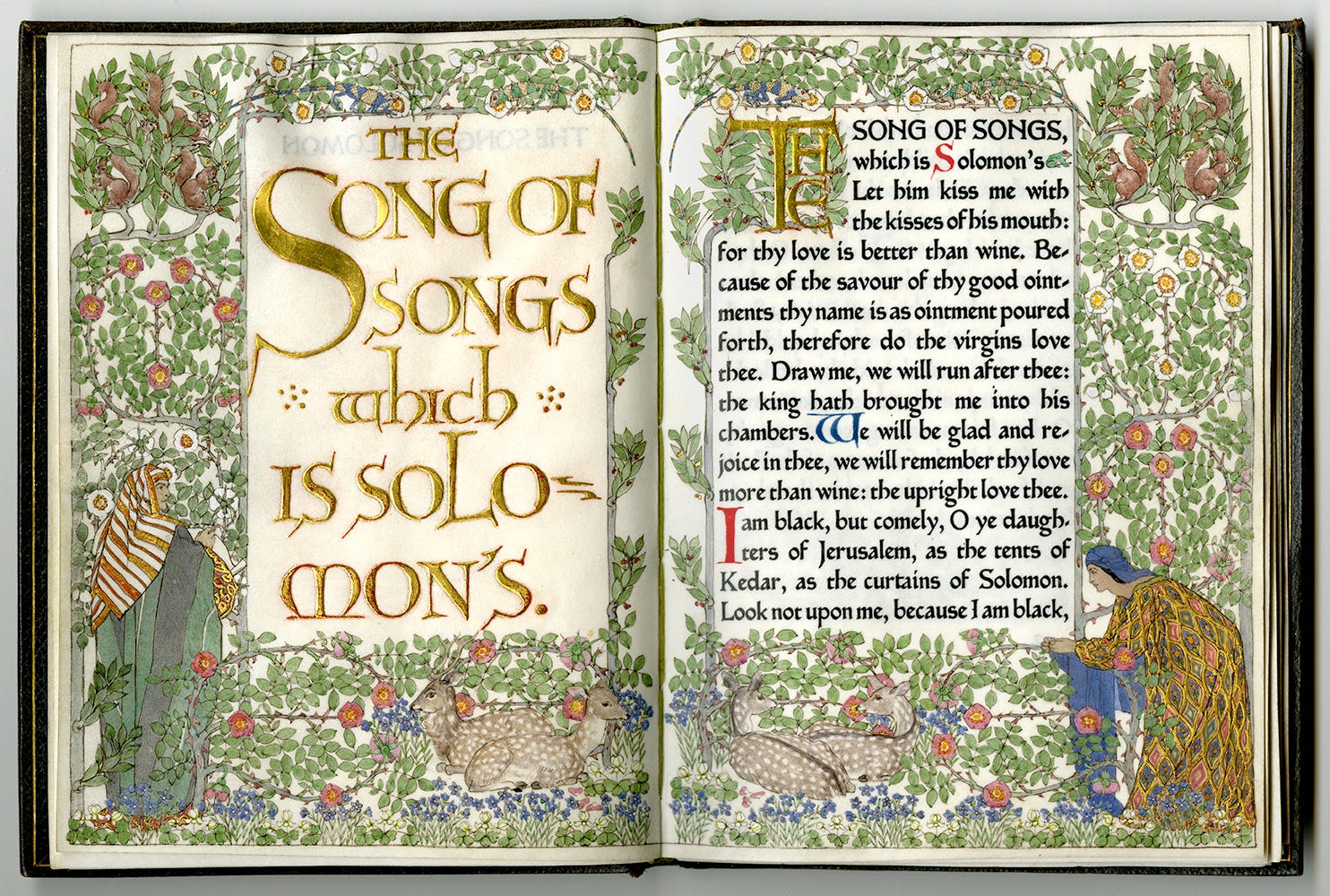
Let’s use the words of Song of Solomon 1:4 to begin our Bible reading, prayers, journaling, and devotional time. This is a prayer for experiencing communion with Christ.
Song 1:4 Draw me after you; let us run.
At the opening of the Song of Songs, the Bride has a simple request of her groom. It flows from her love, desire, and longing to be near him. “Draw me after you.” She craves closeness.
Healthy marriages are filled with this level of closeness. Both spouses want to be near each other. When I’ve been traveling, or when my wife Natalie has, the first night we are all back in the house usually involves catching up on the couch. We want to be around each other.
Do you want to be near Jesus?
“Lord, draw me after you.”
A Prayer for Vibrant Spirituality
I love this prayer because it shows a desire to grow in holiness, enjoyment, and communion with Christ. And it’s also a declaration against cold and bland spirituality.
I’m all in on the spiritual disciplines, but I don’t want to settle for going through them both habitually and apathetically, as though it’s irrelevant whether I encounter the living God or not. I want my prayers and Bible intake to be marked by an experience with the King of kings. “One thing I ask…to gaze upon the beauty of the Lord” (Psalm 27:4). The point of spiritual disciplines isn’t the disciplines. Spiritual formation is more than the implementation or modification of Christianized behavior. It’s responding in love to the love of Jesus. It’s a transformative response from the heart, soul, mind, and strength. It’s beholding and delighting in Christ that transforms into being more godly, Christlike (2 Corinthians 3:18; 1 Timothy 4:7).
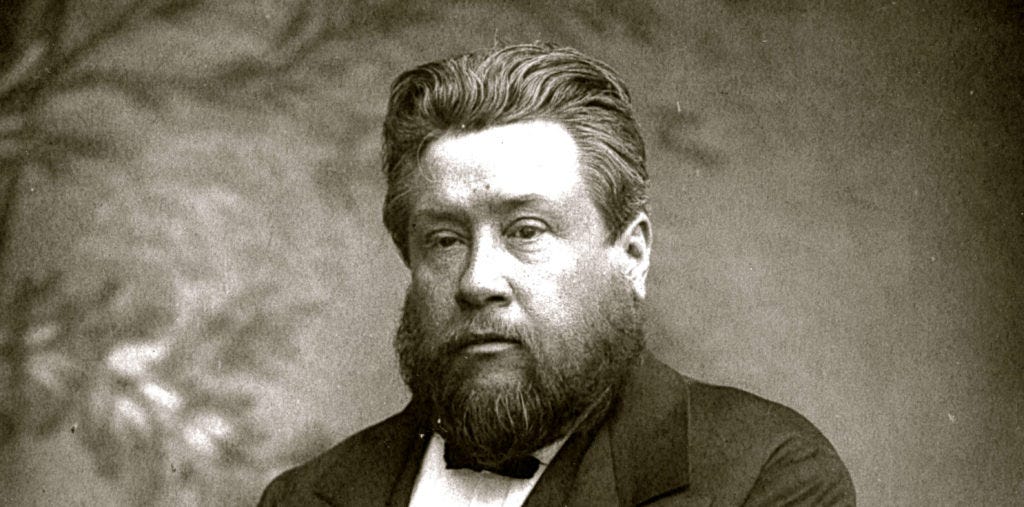
I want to learn about him and his ways, of course, but I also want to fellowship with him. I crave what Spurgeon called “adoring wonder”1 as I commune with Christ in that “secret place of fellowship”2 that can only be described as “an upper realm of rapture, of communion, and conscious union with Christ.”3 If you’ve tasted and seen, you want more.
Song 1:4 is also a humble request for God to do a work in us. It’s an admission of our weakness. “Lord, you move my heart. Draw me, Jesus.” We find a similar prayer in the Psalmist, “Incline my heart to your testimonies” (Psalm 119:36). We have to realize and admit that we can’t muster up spiritual fervor. It’s a gift. It’s of grace. We want what can only come from him—him.
If you are feeling spiritually sluggish, like you are slogging in a spiritual winter—and you don’t want to be there—pray Song 1:4. As John Piper wrote in the opening of his book, When I Don’t Desire God, “When all is said and done, only God can create joy in God.” Song 1:4 shows us the same thing: “Draw me after you, Jesus—only you can do it.”
And the good news is, this is something Jesus loves to do.
Gospel Gravity
He saw the disciples fishing, and he said, “Follow me.” And Jesus said, “And I, when I am lifted up from the earth, will draw all people to myself” (John 12:32). Jesus is saying that when he was crucified, lifted for all to see, taking the sins of all kinds of sinners, all sorts of people, dying for them—he will draw people to himself. This verse shows the path by which Christ draws us to himself in salvation and sanctification. It is the power of the cross. The power of Christ and his love.
As you ask him to draw you, look at where you are, look at where he is, and look at him on the cross, look at him buried, look at him risen, look at him reigning in heaven, look at him dwelling in your heart, and he draws you to himself. Puritan John Owen’s comments on Song 1:4 and John 12:32 are illuminating:
“If you have a true sense, brethren, of the love of Christ in dying for you, it will draw your souls unto him…Whoever is sensible of this attractive power of the death of Christ, it will have this efficacy upon him—it will have adherence and delight—it will cause him more to cleave to Christ. The soul will cleave to Christ with delight, that is affected with the attractive, drawing power of his loving-kindness in his death…Pray, in this ordinance, labour to have such a sense of the drawing power of the love of Christ in his death, that you may resolve to cleave unto him with full purpose of heart, to cleave unto this Christ who has thus loved us.” — John Owen4
Owen’s counsel is to meditate on the love of Christ until you feel your heart drawn toward him. Meditate and think on the great sacrifice of Christ for you. Think of your sins, and then think of Jesus lovingly and willingly taking them at the cross. His blood poured out to forgive you. Why? Because he loves you with the greatest love in space and time, in all of history. The gospel is the grease in the gears of being drawn to Jesus. Or, the gospel’s gravity is strong.
And here’s something incredible.
When you pray, “Draw me after you, Lord.” And when you meditate on his person and work, we are doing exactly what James said. “Draw near to God and he will draw near to you” (James 4:8). Praying and meditating is drawing near to him, and he is right there, drawing us in. “The Lord is near to all who call on him, to all who call on him in truth” (Psalm 145:18).
Let’s make this prayer our own, “Draw me after you, Jesus.”
Implement the Prayer
But don’t employ these words as an incantation or “open-sesame” for our spirituality. It must spring from faith. From a heart that wants to honor him and love him. From a place of surrender and hope, as the Lord said through Isaiah, “But this is the one to whom I will look: he who is humble and contrite in spirit and trembles at my word” (Isaiah 66:2).
When you sit down to read your Bible, pray, “Lord, draw me after you as I read. Away from distractions, away from my phone, away from my worries, draw me to you.”
When you begin an extended time of prayer, or as you write your prayer, don’t forget to ask, “Lord, draw me after you, let us run in the paths of holiness! I want to run the race. Lead me not into temptation, deliver me from evil. Meet with me today, King Jesus.”
When you walk into church, maybe before the first song, or as the first song is going, “Jesus, draw me after you. I want to fellowship with you today. Draw me, Holy Spirit.”
As the sermon begins, “Lord, draw us after you. Meet us in the preaching of your word. May I experience and enjoy your love today.”
How would you use Song 1:4 in your spirituality?
If you are new to my spiritual commentary on the Song of Songs, check out these articles:
C. H. Spurgeon, “Altogether Lovely,” in The Metropolitan Tabernacle Pulpit Sermons, vol. 17 (London: Passmore & Alabaster, 1871), 399.
C. H. Spurgeon, “The Memory of Christ’s Love,” in The Metropolitan Tabernacle Pulpit Sermons, vol. 39 (London: Passmore & Alabaster, 1893), 63.
C. H. Spurgeon, “The Golden Key of Prayer,” in The Metropolitan Tabernacle Pulpit Sermons, vol. 11 (London: Passmore & Alabaster, 1865), 153.
John Owen, The Works of John Owen, ed. William H. Goold, vol. 9 (Edinburgh: T&T Clark), 608.
Beautiful! I love this! Thank you!!